


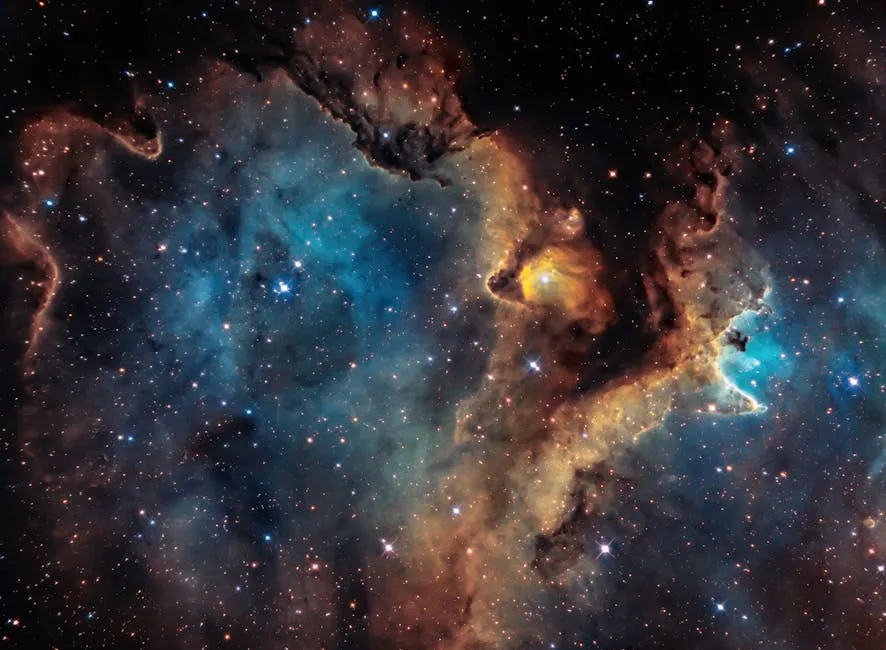
The Cosmic Crunch: When Space Exploration Meets Hardware Scarcity
In the grand quest to understand the universe, humanity has long relied on telescopes, radio dishes, and deep space probes. However, a new frontier has emerged in the 21st century: the digital frontier of the cosmos. Today, astronomers are not just looking at the stars; they are processing them. This shift has turned the search for alien signals, gravitational waves, and distant galaxies into a massive computational challenge. But there is a catch. As artificial intelligence becomes the primary tool for decoding these cosmic signals, it is inadvertently adding fuel to the fire of the global GPU shortage.
Finding Needles in the Galactic Haystack
Astronomy has always been about finding the signal in the noise. In the past, this meant a human expert staring at a screen of data, looking for a blip that didn’t belong. Today, the volume of data generated by modern observatories is staggering. We are talking about petabytes of information, flowing in from instruments on the ground and satellites in orbit. This is what experts call the “galactic haystack.” Imagine trying to find a specific, faint radio signal from a distant pulsar while a billion other cosmic events are shouting at once. It is nearly impossible to do by human eyes alone.
Enter Artificial Intelligence. Machine learning models are now being trained to sort through this noise, identifying patterns that human eyes would miss. These AI systems require immense processing power to run. Specifically, they lean heavily on Graphics Processing Units (GPUs). GPUs are chips designed to handle the massive parallel processing required to train and run these complex neural networks. When you multiply the data volume by the compute requirements, you get a massive demand for hardware that is already in short supply.
The Battle for the Chip
Here lies the conflict. The global demand for GPUs has skyrocketed over the last few years. We see this in the tech sector, where companies need chips to train Large Language Models (LLMs) and run generative AI applications. But now, a new contender has entered the ring: the scientific community. Astronomy is a data-hungry field. To train a model that can detect an exoplanet or map the cosmic microwave background, you need high-end GPUs.
This creates a bottleneck. The same silicon wafers that power the next viral AI app are also needed to decode the secrets of the universe. This is not just a matter of inconvenience; it is a matter of scientific progress. If we cannot get the hardware we need, we cannot advance our understanding of black holes, dark matter, or the origins of the universe. The “crunch” is real. It affects research timelines, budget allocations, and the ability of top-tier observatories to operate at full capacity.
Why GPUs are the Heart of the Problem
Why GPUs specifically? They are not just faster than CPUs for this work; they are different. GPUs are designed to perform the matrix multiplications that lie at the core of deep learning. They can process thousands of data points simultaneously, which is essential when analyzing the light spectra of millions of stars at once. Without this specific type of hardware, the speed of scientific discovery would slow down significantly.
The industry is currently facing a situation where the supply of these chips cannot keep up with the demand. Manufacturers are struggling to produce enough wafers, and the lead times for ordering high-end GPUs have become astronomical. For astronomers, this means that research projects that were supposed to take a year might take three. It forces scientists to make tough choices about which experiments get funded and which have to take a backseat.
Looking for Solutions
So, how do we solve this? The solution likely lies in a combination of better hardware and smarter software. On one hand, we need increased manufacturing capacity. Governments and tech giants are already looking into domestic production and new semiconductor technologies to ease the pressure. On the other hand, researchers are working on more efficient algorithms. There is a push for “sparse” AI models that use fewer resources to get the same result. We also see a movement toward specialized hardware, where chips are designed specifically for scientific workloads rather than general-purpose AI tasks.
Furthermore, there is a growing conversation about sharing resources. Instead of every research institution needing its own massive data center, we might see more collaborative cloud computing environments dedicated to open science. This would allow smaller teams to access the power they need without having to buy the hardware themselves.
Conclusion: A Shared Future for Tech and Science
The intersection of artificial intelligence and astronomy represents one of the most exciting developments in our era. We are using the tools of the future to understand the origin of the universe. However, this progress is not without its challenges. The global GPU crunch is a reminder that our technological ambitions outpace our physical infrastructure. As we continue to build more powerful AI models, we must ensure that the hardware necessary to run them is accessible to all, from commercial startups to the world’s most dedicated astronomers. Only by balancing these competing demands can we hope to find the needles in the galactic haystack.
