


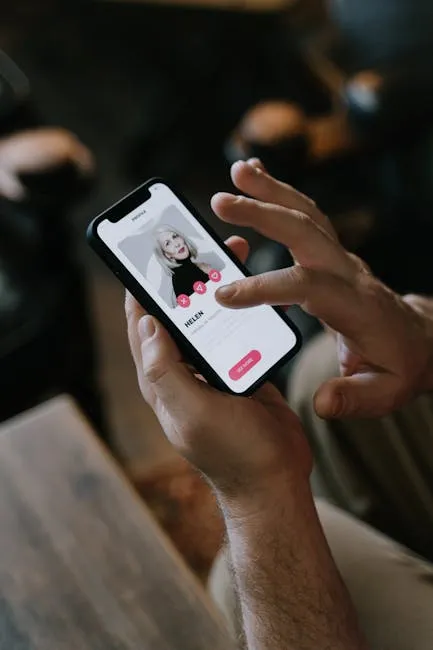
Sam Altman’s Project World Partners with Tinder to Expand AI Verification
In the rapidly evolving landscape of artificial intelligence, few developments have captured as much attention as the recent announcement regarding Sam Altman’s venture, Project World. Known for its innovative approach to anonymous verification using Orb technology, the project is now shifting its focus towards scaling its human verification empire. The latest move involves a strategic partnership with Tinder, signaling a significant expansion of this verification infrastructure into the realm of popular social and dating platforms.
Understanding the Orb-Centered Verification Model
At the core of Project World’s strategy lies a unique verification method centered around an Orb device. Unlike traditional security measures that rely solely on passwords or biometric data, this system aims to create a layer of anonymous, human-centric verification. The goal is to ensure that digital interactions are conducted by real humans rather than bots or AI-generated deepfakes. This is particularly relevant in an era where generative AI can easily fabricate convincing images and voices.
By utilizing these Orb devices, users can prove their humanity without necessarily revealing sensitive personal data. This approach addresses a critical privacy concern while enhancing security. The technology essentially acts as a bridge between the physical world and digital identities, ensuring that the people you interact with online are actually there.
Why Tinder is the First Stop
The decision to partner with Tinder as the first major client is not accidental. Dating applications have long been susceptible to the infiltration of bots and catfish, issues that have plagued the industry for years. With the rise of sophisticated AI, these problems have only become more complex. Project World’s entry into this market offers a solution that aligns perfectly with Tinder’s user base needs.
Users of dating apps often prioritize safety and authenticity. By integrating Project World’s verification tools, Tinder can offer a premium feature set that guarantees users are dealing with genuine individuals. This partnership suggests a broader industry trend where safety features are no longer optional but are becoming essential components of user experience. The integration allows Tinder to differentiate itself in a crowded market by providing a verified space for connections.
The Implications for the Future of Online Interaction
This collaboration sets a precedent for how other social media platforms might approach verification. If a dating leader like Tinder adopts an external verification system, other platforms may follow suit to combat fraud and misinformation. The expansion of Project World’s influence could see Orb technology integrated into various sectors, from professional networking to general social media.
However, this expansion also raises questions about data privacy and consent. While the system is designed to be anonymous, the collection of biometric or behavioral data always carries inherent risks. Project World will need to navigate the delicate balance between providing robust security and respecting user privacy. Transparency in how this data is used and stored will be crucial for maintaining trust among users.
Building Trust in the Digital Age
Trust is the currency of the internet. As AI capabilities grow, so does the potential for misuse. By adopting a human verification model, Project World aims to restore a sense of accountability to digital spaces. This is a move that could redefine how we approach online identity. It suggests that the future of the web may depend less on encryption alone and more on verified human presence.
The partnership with Tinder is a proof of concept for this new infrastructure. It demonstrates that there is a viable market for hardware-integrated verification services within consumer apps. As the technology matures, we might see it become a standard feature, much like two-factor authentication is today.
Conclusion
Sam Altman’s Project World is taking a bold step into the mainstream by partnering with Tinder to scale its human verification empire. This move underscores the growing necessity for robust identity verification in the age of advanced AI. While the integration of Orb technology into dating apps is a significant development, it is just the beginning. As the industry looks toward the future, the focus will remain on balancing security with privacy, ensuring that as technology advances, our digital interactions remain safe, authentic, and human.
