


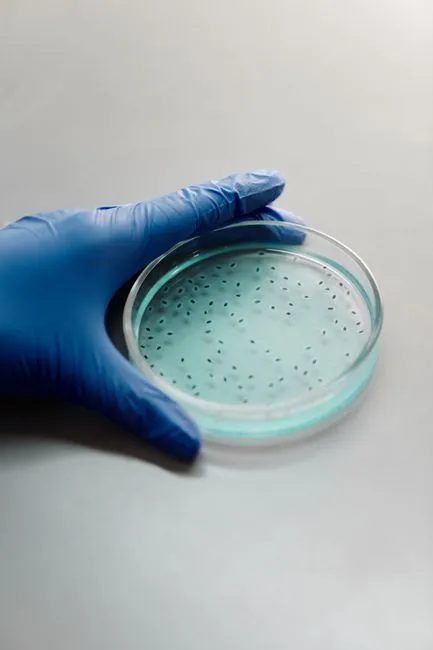
Cleaning up environmental pollution has always been a race against time. Factories, agriculture, mining, and industrial processes release contaminants that can linger in soil, water, and even living organisms. Traditional treatment methods often rely on chemical filtration, physical separation, or costly infrastructure. While effective in some cases, these approaches can be energy-intensive, expensive to scale, and difficult to adapt to complex, real-world environments.
A more promising path is emerging at the intersection of biology and artificial intelligence: using living microbial communities to break down pollutants. The new twist is that generative AI is helping scientists engineer these communities with far greater precision than ever before. In particular, the concept of symbiotic biofilm engineering is gaining attention as a way to design stable, cooperative microbial systems that can target specific contaminants and degrade them more efficiently.
What Is Symbiotic Biofilm Engineering?
A biofilm is a structured community of microorganisms attached to a surface and embedded in a self-produced matrix of proteins, polysaccharides, and other molecules. Biofilms naturally form in rivers, hot springs, soil, and even inside industrial pipes. They are remarkably resilient and can survive conditions that free-floating cells often cannot.
In bioremediation, biofilms are valuable because they can concentrate microbial activity near a contaminant plume. Instead of dispersing treatment resources across a large area, a biofilm can act as a living filter or degradation hub. The term symbiotic comes into play when multiple species work together: one group may break down a complex pollutant into simpler intermediates, another may consume those intermediates, and a third may help maintain the structural stability of the biofilm or protect the community from stress.
The challenge has always been design. Nature builds biofilms through evolution, but pollution problems often require purpose-built systems. If scientists want a biofilm that can degrade a particular pesticide, solvent, or heavy-metal complex, they need to choose the right organisms, the right metabolic pathways, and the right environmental conditions. That is where generative AI begins to change the game.
Why Generative AI Fits This Field So Well
Generative AI is not just another predictive tool. It can propose new designs, sequences, structures, and configurations that may not be obvious to human researchers. In biofilm engineering, that capability is especially useful because microbial systems are highly complex.
A single biofilm may contain dozens or hundreds of species, each with its own genome, growth rate, nutrient needs, and stress responses. The interactions between them can be subtle. A small change in one organism’s metabolism may ripple through the entire community, altering biofilm architecture or pollutant-degradation efficiency.
Generative AI models can help researchers explore this design space in several ways:
- Microbial community design: AI can suggest combinations of organisms that are likely to complement one another metabolically.
- Pathway prediction: Models can infer which enzymes or metabolic steps are missing and propose candidates for pollutant breakdown.
- Sequence generation: In some cases, generative systems can help design DNA sequences for enzymes or regulatory elements that improve function.
- Environmental optimization: AI can recommend pH ranges, nutrient levels, attachment surfaces, or flow conditions that support stable biofilm growth.
- Simulation and iteration: Rather than testing one design at a time, researchers can evaluate thousands of virtual candidates before moving to the lab.
This makes the process faster and more targeted. Instead of relying only on trial and error, scientists can use AI to narrow the search for viable biofilm systems that are likely to work in a specific contaminated environment.
From Virtual Design to Living Systems
The promise of generative AI in this field is not just theoretical. The workflow generally follows a cycle of prediction, testing, and refinement.
First, researchers gather data from published studies, environmental samples, genomic databases, and lab experiments. This data may include microbial genomes, enzyme functions, pollutant chemistry, degradation rates, and biofilm performance under different conditions. The AI model is then trained to recognize patterns connecting microbial traits, community structure, and pollutant breakdown outcomes.
Once the model has learned these relationships, it can generate candidate biofilm designs. For example, a team targeting a petroleum-derived contaminant might ask the model to propose a community that can oxidize hydrocarbons while also maintaining adhesion to a porous surface. The AI might return several candidate consortia, each with predicted strengths and weaknesses. Researchers can then test the most promising options in controlled lab environments.
The results feed back into the model, improving its accuracy over time. This iterative loop is one of the most important advantages of AI-assisted bioengineering. It turns what was once a slow, manual process into a more adaptive and data-driven workflow.
Targeted Pollutant Breakdown: Why Specificity Matters
One of the biggest limitations of conventional bioremediation is that microbial systems are often broad in function but imprecise in application. A microbe may degrade one class of compounds but not another. It may grow well in the lab but fail in a contaminated riverbed. It may remove part of a pollutant but leave behind toxic intermediates.
Generative AI helps address this by enabling more targeted design. Rather than selecting a single “super-degrader” organism, the system can be engineered as a cooperative network. For example, one strain might initiate the breakdown of a complex molecule, while another strain metabolizes the byproducts, reducing the risk of secondary contamination. Another strain might produce extracellular enzymes that help break down resistant materials. A fourth might contribute to biofilm matrix formation, ensuring the community remains attached and active where it is needed most.
This kind of engineered symbiosis can be especially useful for difficult pollutants, including certain pesticides, industrial solvents, hydrocarbons, pharmaceutical residues, and heavy-metal-contaminated environments. In some cases, the goal is not only to remove the pollutant but to transform it into less harmful compounds that can be safely assimilated into the ecosystem.
Benefits Beyond Speed
The advantages of using generative AI in symbiotic biofilm engineering extend well beyond faster lab cycles.
Lower-cost environmental intervention
If AI can help identify effective microbial systems with fewer experiments, the cost of bioremediation may decrease. That is important for communities that need affordable and scalable cleanup solutions, especially in regions where industrial contamination is widespread.
More sustainable treatment methods
Living systems can sometimes replace chemical or energy-intensive processes. A well-designed biofilm may operate using nutrients already present in the environment, reducing the need for external inputs and minimizing secondary waste.
Adaptability to local conditions
Contamination is rarely uniform. Soil composition, temperature, salinity, oxygen levels, and pollutant mixtures vary by location. AI-assisted design can help tailor biofilm systems to site-specific conditions, making remediation more practical and less one-size-fits-all.
Improved ecological safety
Because AI can model interactions more broadly, it may help researchers avoid designs that could disrupt native ecosystems. By predicting how an engineered community might interact with local microbes, scientists can make more informed decisions about safety and containment.
The Challenges Still Ahead
Despite the strong potential, there are significant hurdles. Biology is messy, and AI models are only as good as the data behind them. Microbial behavior in the field can be influenced by unpredictable variables that are hard to capture in a simulation.
Other challenges include:
- Data gaps: Many environmental microbes are poorly characterized, and pollutant-specific degradation data may be limited.
- Scale-up uncertainty: A biofilm that works in a lab flask may behave differently in a river, aquifer, or contaminated soil column.
- Regulatory questions: Engineered microbial communities raise important biosafety and environmental release concerns.
- Long-term stability: Researchers need to ensure that designed biofilms remain functional over time and do not collapse under environmental stress.
- Interpretability: Even when AI proposes a successful design, understanding why it works remains essential for trust and refinement.
These challenges are not reasons to stop, but they do highlight the need for careful validation, transparent modeling, and responsible deployment.
Where This Could Lead
The convergence of generative AI, synthetic biology, environmental engineering, and high-throughput experimentation may create a new generation of living cleanup technologies. In the near term, we can expect more AI-guided lab-on-a-chip systems, automated microbial screening platforms, and digital twin models that simulate biofilm behavior before field deployment.
In the longer term, this field could support smarter environmental management. Imagine municipalities using AI-designed biofilm filters at wastewater outflows. Or agricultural regions deploying tailored microbial mats to break down pesticide runoff. Or industrial sites using engineered biofilm reactors to treat contaminated groundwater without major infrastructure projects.
The key idea is that the solution is not just a single microbe or a single chemical process. It is a designed ecosystem, optimized by intelligence and tested in the real world.
Final Thoughts
Generative AI is opening a powerful new chapter in environmental science. By helping researchers design symbiotic biofilms with greater precision, it may make bioremediation faster, more targeted, and more adaptable to the complex pollution challenges of the modern world. The technology is still maturing, and the biological, regulatory, and ecological questions need to be handled carefully. But the direction is clear: the future of pollutant cleanup may not depend only on machines and chemicals, but on living communities intelligently designed to restore damaged environments.
Related read: AI Wonderland Weekly: The Biggest AI Trends Shaping September 2026
