


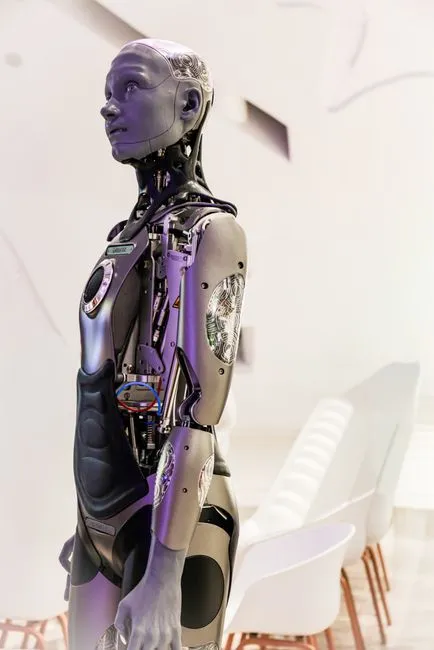
Every week, artificial intelligence moves a little further into the background of daily life. It is less about flashy demos and more about tools that quietly shape how people work, create, learn, and connect. This edition of AI Wonderland Weekly, dated 4 September 2026, takes a closer look at the themes that are defining the current moment in AI. The story is not just about bigger models or faster chips. It is about how AI is becoming a practical part of workflows, how creators are adapting to new forms of expression, and how businesses are learning to use these systems responsibly.
Why this week’s AI conversation feels different
If you have been following AI for the past few years, one pattern should be obvious: the industry is past the “wow” phase. That is not to say the technology is no longer impressive. It is. But the conversation has shifted from asking what AI can do to asking how it should be used, how it can be trusted, and how it can be integrated without creating unnecessary complexity.
For many people, AI has become less like a novelty and more like a utility. Just as search engines changed how people find information and smartphones changed how people communicate, AI is changing how people process ideas. This week’s roundup focuses on the trends that are making that shift feel more real than ever.
AI agents are becoming useful, not just impressive
One of the most interesting developments in recent AI discussions is the rise of AI agents. These are systems that can carry out multi-step tasks with a degree of independence. Instead of simply answering a question, an agent can research, compare options, draft a plan, update a document, and follow up with the next step.
What makes this exciting is the practical value it can create. Imagine an assistant that can help schedule a meeting, summarize the notes from the previous call, draft a follow-up email, and remind you of outstanding tasks. That kind of workflow support is becoming more realistic as models become better at reasoning, planning, and using tools.
That said, the most useful agents are not the ones that try to do everything. The best ones are narrow, reliable, and easy to supervise. They know their boundaries. They ask for confirmation when needed. They make it simple for a person to review what happened. This is where trust becomes a design feature, not just a technical concern.
Multimodal AI is changing how people interact with information
Another major theme is the growth of multimodal AI. These systems can work across text, images, audio, video, and data in more connected ways. The result is a smoother experience that feels less like switching between separate apps and more like working with a single intelligent assistant.
For content creators, this is especially powerful. A writer can describe a scene and get visual references. A marketer can turn a rough brief into a draft, then adapt it into a script, a social post, and a presentation outline. A student can upload notes and ask for a clearer explanation, a summary, or a set of practice questions.
The key here is not just speed. It is flow. When AI can move naturally between formats, it reduces friction. That is one reason multimodal tools are becoming more central to creative and professional work.
Enterprise AI is moving from experiments to everyday operations
Companies have spent years testing AI in small pilots. Now, the focus is shifting toward production. That means less about “what if we tried this?” and more about “how do we make this reliable, secure, and scalable?”
For many organizations, the biggest challenges are no longer technical alone. They are operational. Teams need clear guidelines. They need ways to measure quality. They need to protect sensitive information. They also need to make sure that AI outputs are consistent enough to support real business decisions.
This is where the difference between a demo and a dependable system becomes clear. A demo only needs to work once. A production system needs to work repeatedly, in different contexts, with different users, and under real pressure. That is why governance, testing, and human oversight are becoming such important parts of enterprise AI strategy.
Open models and developer ecosystems keep expanding
Another important trend is the continued growth of open and developer-friendly AI ecosystems. While large platforms still dominate the headlines, the broader ecosystem is becoming more diverse. Developers are building with smaller, more efficient models. They are fine-tuning systems for specific industries. They are creating tools that solve niche problems that larger general-purpose models may not address as well.
This matters because innovation does not only happen at the center of the industry. It also happens in the periphery, where developers experiment, iterate, and find new use cases. The more accessible the tooling becomes, the more likely it is that useful applications will emerge from unexpected places.
That is one of the most encouraging parts of the current AI landscape: the field is broadening. It is no longer only about the biggest labs or the most visible products. It is also about communities, developers, and small teams pushing the technology in new directions.
Safety, privacy, and regulation are no longer afterthoughts
As AI becomes more embedded in daily life, the questions of safety and responsibility are becoming harder to ignore. This is not just about preventing obvious harms. It is also about building systems that are transparent, fair, and easy to audit.
Privacy is another major concern. People are increasingly comfortable sharing information with AI tools, but that comfort should not come at the cost of control. Users need to understand what data is being used, how it is being stored, and what happens to it over time. Clear choices and meaningful controls are becoming essential parts of a trustworthy AI experience.
Regulation and best practices are also shaping the industry. The goal is not to slow innovation down, but to make sure it develops in a way that protects people while still allowing progress. In the coming months, this balance will remain one of the most important topics in AI.
Creative AI and human storytelling remain central
One of the most human parts of the AI story is creativity. AI can help generate ideas, refine language, produce visuals, and test different directions quickly. But the best creative work still depends on taste, context, and intention. AI can accelerate the process, but it does not replace the need for a clear point of view.
This is especially true in writing, design, music, and video. The tools are changing, but the underlying goal remains the same: to communicate something meaningful. The most effective creators are not the ones who rely on AI blindly. They are the ones who understand when to use it, when to ignore it, and when to bring in their own judgment.
In that sense, AI is not making human creativity less important. It is raising the bar. The challenge now is not only to produce content, but to produce content that is thoughtful, original, and worth paying attention to.
What to watch next
Looking ahead, several themes are likely to stay front and center. The first is the continued maturation of AI agents, especially in business workflows. The second is the rise of more specialized models designed for particular industries and tasks. The third is the growing emphasis on responsible deployment, including privacy, accountability, and user trust.
There is also likely to be more attention on efficiency. As demand for AI grows, the industry will keep looking for ways to make systems faster, cheaper, and more accessible. That could lead to new tools, new use cases, and a broader range of people getting practical value from AI.
Final thoughts
The biggest takeaway from this edition of AI Wonderland Weekly is that AI is becoming more useful because it is becoming more integrated. The future of AI is not just in more power. It is in better design, better judgment, and better alignment with real human needs. The systems that will matter most are not the ones that simply impress people for a moment. They are the ones that help people think more clearly, work more effectively, and create with greater confidence. That is the direction the industry is moving, and it is one of the most interesting parts of the current AI moment.
Related read: How to Create Your First AI Project Step-by-Step (A Beginner-Friendly Guide)
