


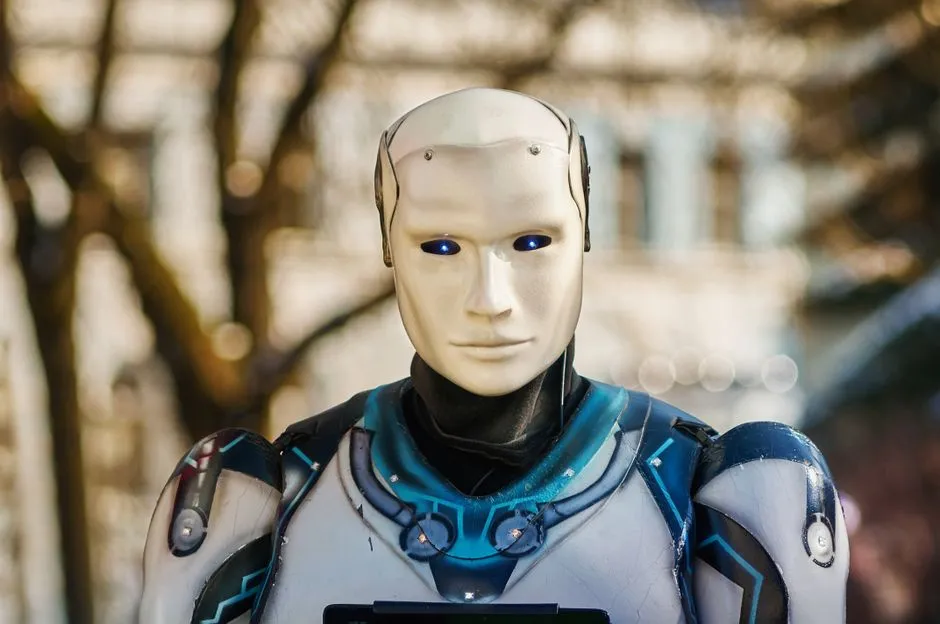
For the past few years, most of our experience with artificial intelligence has been digital. We type prompts into chatbots, generate images, summarize documents, and let software help us write code, plan trips, or organize data. In many ways, AI has become a quiet layer of the modern internet, embedded in our browsers, phones, and work tools. But there is another direction that feels far more dramatic: AI with a body.
When we talk about embodied AI, we are talking about intelligence that does not just process information in a server room, but acts in the physical world. That means robots. Not just simple machines that follow a fixed path, but systems that can perceive, reason, adapt, and interact with their environment. This shift changes the conversation from “Can AI generate text?” to “Can AI operate safely and usefully in a world made of objects, people, and uncertainty?”
Why embodiment changes the question
Language models are impressive, but they operate in a symbolic space. They can talk about objects, actions, and consequences, yet they do not have to lift anything, dodge anything, or feel anything. A robot, by contrast, has to live with the messy facts of the physical world. Gravity exists. Surfaces slip. Objects move. People are unpredictable. A door may be heavier than expected. A package may be softer, rounder, or more fragile than the model assumed.
That is why embodied intelligence is such a different challenge. It is not enough to understand a scene in the abstract. The system must translate understanding into action, often in fractions of a second. It has to coordinate vision, touch, balance, force, timing, and decision-making. A robot in a warehouse does not merely “know” where a box is. It has to grasp it, avoid collisions, place it correctly, and recover when something goes wrong.
From cloud-based thinking to real-time action
One of the big ideas behind embodied AI is that perception and action need to be tightly connected. In a purely digital system, a model can take time to reason. In a robot, delays can be dangerous. If a delivery robot is walking through a busy hallway, it cannot afford to wait for a cloud response before stepping aside. If a robotic arm is handling glass, it cannot hesitate long enough to risk a collision.
That is why many researchers are now focused on local intelligence, fast sensor fusion, and control systems that can make split-second judgments. The goal is not to replace large AI models, but to combine them with smaller, faster systems that can handle the immediate physical task. Think of it as a division of labor: the broader model helps understand context and goals, while lower-level systems manage the body in real time.
This is also why simulation has become so important. Robots can practice in virtual environments before they ever touch the real world. They can learn to stack, walk, reach, and recover from failure without breaking anything. But simulation is never perfect. Real-world friction, lighting, wear and tear, and unpredictability always add new problems. The hardest part is not making a robot work in a demo, but making it work reliably every day.
What robots can teach us about intelligence
There is a deeper reason researchers care about embodied AI: it may reveal what intelligence actually requires. For a long time, AI progress has been measured by how well systems perform on abstract benchmarks. But a robot forces a different standard. Can it learn from experience? Can it recover from mistakes? Can it work beside people without making them nervous or unsafe?
These questions matter because they push AI beyond pattern recognition. They ask whether a machine can develop something closer to practical judgment. A robot that can navigate a cluttered kitchen, for example, is not just recognizing objects. It is making continuous trade-offs: where to reach, how much force to use, whether to ask for help, and when to stop. That kind of competence is harder to test, but also much more meaningful.
The practical future is not just sci-fi
It is tempting to imagine humanoid robots in every home, but the more immediate value of embodied AI is probably less cinematic. Factories need flexible assistance. Warehouses need faster sorting and handling. Hospitals could benefit from robots that help with logistics, monitoring, or repetitive physical tasks. Construction, agriculture, and maintenance work may all see robots that can operate in environments too messy or dangerous for humans.
The most useful robots will not necessarily look human. They may be wheeled platforms, robotic arms, mobile manipulators, or specialized tools. The point is not to replace people with machines, but to extend human capability in areas that are physically demanding, repetitive, or risky. In that sense, embodied AI is less about creating a new kind of being and more about creating a more capable partner for real-world work.
Safety and trust will decide the outcome
None of this works without trust. A robot in a shared space has to be predictable, safe, and respectful of boundaries. People need to know what the machine is doing, why it is doing it, and how to intervene if needed. That is why the next phase of AI is not only an engineering challenge, but also a social one. Design, regulation, and user experience will matter just as much as model performance.
Embodied AI also raises questions about responsibility. If a robot makes a mistake, who is accountable? The developer? The operator? The person who deployed it? As these systems become more capable, the answer cannot remain vague. We will need clearer standards for testing, oversight, and transparency, especially in places where people’s safety is at risk.
The body changes the meaning of intelligence
At its core, embodied AI is a reminder that intelligence is not only about knowing things. It is about doing things well. A chatbot can explain how to carry a heavy object, but a robot has to actually carry it. That difference sounds small, but it is enormous. It changes the nature of the problem, the kind of feedback available, and the consequences of failure.
As AI moves from screens into the physical world, we are not just watching technology get more advanced. We are seeing a new way of testing what machines can understand, how they can learn, and how they can live alongside us. The robot is not just a device. It is a mirror. And in that mirror, we may finally see a clearer picture of what intelligence means when it has to meet the real world on its own terms.
Related read: Humans Are Shaping AGI: Why Artificial General Intelligence Is a Societal Project
