


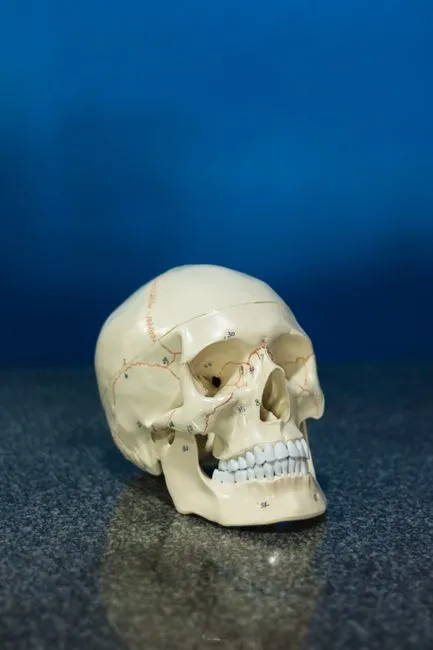
Forensic anthropology has always been a field where science, patience, and human compassion intersect. When unidentified remains are recovered, the goal is not simply to classify bones or estimate age ranges. The goal is often far more personal: to help families, investigators, and communities find answers. For someone who has lost a missing person, even a small lead can feel like hope. That is why the process of reconstructing identity from incomplete skeletons, fragmented bones, or partial remains has long been both scientifically demanding and emotionally weighty.
Matching fragments or incomplete skeletons to missing persons is slow and complex. It may involve comparing skeletal measurements, reviewing dental records, analyzing old photographs, and cross-checking case files. In many cases, the remains are damaged, mixed, or incomplete. Traditionally, forensic anthropologists relied on careful observation, experience, and established measurement methods. Those methods remain essential, but over the last few years, artificial intelligence has begun to change the process in meaningful ways.
Why identifying fragmented remains is so difficult
Human remains do not always arrive at the laboratory in a complete or ideal condition. Weather, decomposition, animal activity, burial conditions, or trauma can all alter the evidence. A single skull may be missing key landmarks. A skeleton may be scattered. In mass disaster scenarios or long-term missing person cases, the number of individuals involved can make the task even harder.
Forensic anthropologists are trained to read the body with remarkable precision. They can estimate biological sex, age, ancestry, stature, and sometimes even occupation-related changes in bone. But those estimates are not always definitive. They provide a profile, not an identity. Once a profile is created, the next challenge is connecting it to missing person records. That step can be difficult because missing person data is often incomplete, inconsistent, or outdated. A family may remember approximate details, but exact measurements, dental charts, or recent photos may not exist.
Where AI enters the forensic workflow
AI does not replace forensic anthropologists. Instead, it acts as an augmented tool. It helps researchers process large amounts of visual and numerical data more quickly than manual review alone. In forensic anthropology, that can mean analyzing skeletal images, comparing fragment shapes, predicting biological traits, and searching missing person databases for possible matches.
The value of AI in this field is not that it “solves” identification automatically. Its value is that it can narrow possibilities, highlight patterns, and reduce the time spent on repetitive tasks. That allows trained professionals to focus on interpretation, contextual analysis, and the human-centered work of communicating with families and investigators.
Matching skeletal fragments
One of the most difficult parts of forensic casework is determining whether bone fragments belong to the same individual. In a scene with multiple victims, or in cases where remains have been disturbed, separating individuals is critical before any meaningful identification can occur.
AI-assisted systems can analyze the geometry, texture, and edges of bone fragments to suggest possible connections. This is especially useful when fragments are small or when traditional visual comparison is difficult. Machine learning models can be trained on 3D scans or high-resolution images to recognize subtle patterns that may be hard for the human eye to compare across hundreds of fragments. Even if the final decision remains with a forensic expert, the AI can help create a clearer starting point.
Predicting biological traits from skeletal data
Another area where AI is making an impact is the prediction of biological characteristics. Forensic anthropologists have long used measurements from the skull, pelvis, long bones, and other structures to estimate sex, age, and ancestry. AI models can process those measurements alongside visual features to produce probabilistic estimates.
In some cases, AI can also assist with facial approximation. This is a sensitive and complex process, because the face is not only shaped by bone. Soft tissue, skin thickness, muscle, and individual variation all matter. Still, algorithmic facial reconstruction tools can generate possible representations that may help investigators or families recognize a missing person. These tools are most useful when used carefully and with clear communication about their limitations.
Connecting biological profiles to missing persons databases
Perhaps one of the most practical benefits of AI in this field is search and matching. When a biological profile is generated, investigators may need to compare it against thousands of missing person records. That is where machine learning can be especially helpful. AI can compare skeletal estimates, dental records, photographs, DNA status, and case notes to surface leads that might otherwise be missed.
This is not just a speed issue. It is also a comprehensiveness issue. In large databases, a potential match may be buried among many similar records. AI can help prioritize cases by identifying the most likely candidates, while still leaving the final judgment to human reviewers. That balance is important, because forensic identification must be defensible, transparent, and respectful of the people involved.
The human side of AI-assisted identification
Behind every case is a person. For families, the process of searching for a missing loved one can be exhausting, stressful, and painful. Any tool that helps bring clarity can make a real difference. AI-augmented forensic anthropology can help by making the process more efficient, but it also needs to be handled with care.
That means clear communication. Families should understand what AI can and cannot do. They should also understand that an AI-generated estimate is not the same as a confirmed identity. In sensitive cases, overconfidence in algorithmic output can be harmful. The best approach is one in which AI supports the forensic team, not replaces it.
Ethical limits and practical cautions
As with any use of AI in a field tied to identity, justice, and human rights, ethical considerations are essential. Training data must be representative, because biased datasets can lead to inaccurate predictions. Models should be tested carefully and used in ways that can be explained and challenged. Privacy is also a major concern, especially when facial imagery, DNA data, or missing person records are involved.
In addition, AI should not be presented to the public as an infallible solution. Forensic identification often requires multiple lines of evidence. Skeletal analysis, DNA testing, dental comparison, personal effects, and investigative leads all play a role. AI can strengthen the process, but it works best as part of a broader, multidisciplinary approach.
What the future may look like
The future of AI-augmented forensic anthropology is likely to become more integrated, more accessible, and more precise. We may see advanced 3D modeling tools that allow investigators to virtually assemble skeletal remains before physical reconstruction. We may also see better integration between AI systems and national missing person databases, making it easier to compare biological profiles across regions and cases.
At the same time, the field will continue to rely on human expertise. Forensic anthropology is not just about measurements. It is about interpretation, context, and responsibility. The most effective future systems will be those that combine powerful technology with strong ethical standards, transparent methods, and a deep respect for the individuals behind the evidence.
In the end, AI-augmented forensic anthropology is not about replacing the human judgment that has made this field possible. It is about giving professionals better tools to do difficult work more effectively. When those tools are used responsibly, they can help reduce uncertainty, speed up investigations, and, most importantly, bring long-awaited answers to families who have been waiting for closure.
Related read: How AI Is Helping Reconstruct Unidentified Remains and Close Missing Person Cases
