


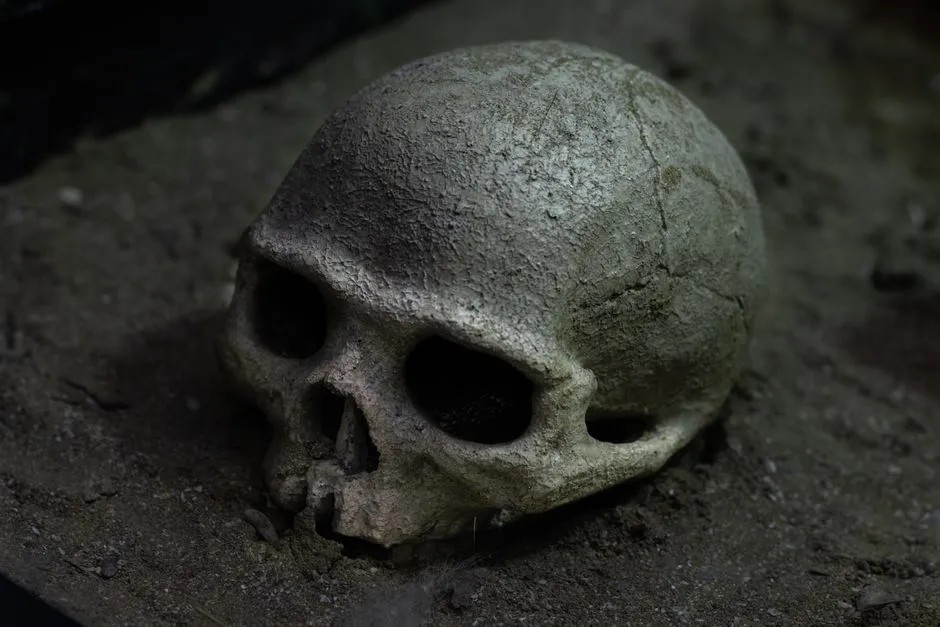
Forensic anthropology has long played a quiet but essential role in criminal investigations, disaster response, and missing-persons cases. When human remains are found in fragmented, degraded, or incomplete condition, forensic anthropologists work to determine biological characteristics, match skeletal elements, and help identify individuals who may have been missing for years or even decades. It is meticulous, human-centered work, but it is also slow. Over the past several years, artificial intelligence has begun to change parts of that process, offering new ways to analyze skeletal data, compare fragments, and narrow down possible identities much faster than traditional methods alone.
Why Unidentified Remains Are Difficult to Match
Reconstructing an identity from human remains is rarely straightforward. In many cases, the remains are not complete. A skull may be missing key facial bones, a femur may be broken into several pieces, and soft tissue may be absent entirely. Environmental factors such as exposure to water, soil, fire, animals, or decomposition can further alter the physical evidence. These conditions make it difficult to form a clear biological profile or match the remains to a missing person.
Missing-persons cases add another layer of complexity. Investigators may have only limited information to work with: a last known photograph, a dental record, a partial description, or family accounts that are vague or inconsistent. In mass-fatality incidents, the number of unidentified remains can far exceed the number of available records, making manual comparison extremely time-consuming.
The Human Bottleneck
Traditionally, forensic anthropologists relied on careful measurement, visual assessment, and experience to estimate age, sex, stature, and other biological traits. They also compared skeletal fragments with known remains or medical records. While this work is highly skilled and valuable, it is also labor-intensive. When investigators need to compare thousands of records or hundreds of fragmentary remains, the process can become a bottleneck, delaying identification and closure for families.
How AI Changes the Workflow
AI-augmented forensic anthropology does not replace the anthropologist. Instead, it supports the workflow by handling repetitive, data-heavy, or computationally intensive tasks. Machine learning models can analyze images of bones, detect patterns that may be difficult to see with the naked eye, and generate probabilistic estimates that help guide further investigation.
Computer vision, for example, can be used to examine skeletal photographs or 3D scans and identify diagnostic features. Algorithms can assist in estimating age ranges, sex, and stature by comparing measurements against large reference datasets. In some cases, AI can also help reconstruct facial features from cranial data, though this remains an area where human interpretation is essential and results must be treated cautiously.
From Fragments to Probable Identity
One of the most promising uses of AI is in matching incomplete remains to missing persons. Rather than asking a model to provide a single definitive answer, AI systems can generate ranked lists of possible matches based on the available evidence. For example, if a partial skeleton matches certain measurements, dental features, and historical records, the system may identify a small group of missing persons whose profiles are most consistent with the evidence.
This approach changes the investigative process from a purely manual search into a structured, data-driven one. Investigators can focus on the most likely candidates first, while still relying on forensic experts to validate findings and interpret the broader context.
Key Applications in Forensic Reconstruction
- 3D craniofacial reconstruction: AI can help estimate facial anatomy from skull data, supporting identification efforts when soft tissue is unavailable.
- Biological profile estimation: Models can assist in estimating age, sex, and stature from skeletal measurements.
- Fragment matching: Machine learning can help compare broken bone fragments and determine whether they belong to the same individual.
- Dental and medical record comparison: AI can support the matching of dental records, radiographs, or other clinical data against missing-person records.
- Database integration: AI can help cross-reference fragmented evidence with multiple databases, including missing-persons files, forensic collections, and historical records.
What Makes AI-Augmented Forensic Anthropology Useful
The main advantage is speed. In cases involving large numbers of remains or records, AI can process and compare data far faster than manual review. It can also improve consistency by reducing the impact of fatigue and subjective variation in repetitive tasks. When the evidence is fragmentary, AI can help surface patterns that might otherwise be overlooked.
Another benefit is scalability. As forensic databases grow, the amount of data available for comparison increases. AI makes it possible to search through those larger datasets in a practical way. This is especially important in disaster response, where time is critical and identification must be done efficiently without compromising accuracy.
Limitations and Ethical Considerations
Despite its promise, AI in forensic anthropology is not a magic solution. The quality of the results depends heavily on the quality of the data. If reference datasets are incomplete, biased, or poorly documented, the outputs may be misleading. Skeletal remains are also affected by environment, pathology, trauma, and preservation, all of which can complicate analysis.
Ethical concerns are equally important. Forensic identification involves sensitive personal information, and any system that processes biological or medical data must handle privacy with care. There are also questions around consent, data ownership, and the potential for bias in algorithmic decision-making. For that reason, AI should be treated as a decision-support tool, not an autonomous authority. Human experts must remain central to the process, especially when interpretations may affect legal outcomes or family narratives.
The Future of AI in Missing-Persons Investigation
As AI models continue to improve, their role in forensic anthropology is likely to expand. Future systems may become better at integrating multiple data types, such as skeletal images, dental records, genetic data, and historical photographs. They may also become more interpretable, giving investigators clearer explanations for why a particular match was suggested.
The most effective forensic workflows will probably be hybrid ones, combining the analytical power of AI with the judgment, context, and ethical awareness of human experts. In that model, machines handle the heavy computational lifting, while forensic professionals focus on interpretation, validation, and communication.
Conclusion
AI-augmented forensic anthropology represents a meaningful step forward in the identification of unknown remains. By helping investigators match fragments, estimate biological characteristics, and search through large datasets more efficiently, AI can reduce the time it takes to identify missing persons and bring answers to families who have been waiting. At the same time, the technology must be used responsibly, with transparency, human oversight, and a strong commitment to ethical standards. When applied thoughtfully, AI does not replace forensic anthropology; it strengthens it, making the work more precise, more scalable, and more effective in cases where identity matters most.
Related read: AI Wonderland Weekly: A Calmer Way to Catch Up on AI Research
