


The narrative surrounding artificial intelligence has long been dominated by one dominant theme: competition. For years, headlines have framed the rapid advancement of AI as a high-stakes geopolitical chess match, primarily between the United States and China. Governments pour billions into compute infrastructure, tech giants race to release more capable models, and talent is aggressively courted across borders. But step away from the press releases and venture capital pitch decks, and a different conversation emerges. One that is less about winning and far more about survival.
After spending time with leading AI researchers and engineers in China, the prevailing sentiment was strikingly familiar. Despite the geopolitical friction and export restrictions that currently define US-China tech relations, the experts on the ground are grappling with the exact same anxieties as their American counterparts. They are not just worried about falling behind. They are deeply concerned about what happens when the technology outpaces our ability to control it. In fact, many of them have started referring to the looming risk as a potential “Chernobyl moment” for artificial intelligence.
The Reality Behind the AI Arms Race
On the surface, the AI race looks like a straightforward contest of resources. It is a battle measured in teraflops of computing power, petabytes of training data, and the speed at which new models can be deployed. Both nations have recognized that AI will fundamentally reshape defense, healthcare, manufacturing, and the global economy. This realization has triggered a feedback loop of accelerated development, where every breakthrough in one country prompts an immediate counter-move in the other.
Yet, this relentless pace comes with hidden costs. When the primary metric of success becomes speed and scale, foundational questions about safety, alignment, and long-term stability often take a back seat. Researchers in Shenzhen, Beijing, and Shenzhen find themselves operating under immense pressure to deliver results, mirroring the high-stakes environment in Silicon Valley. The result is a global ecosystem where innovation is happening at breakneck speed, but the guardrails are still being drafted in real time.
Why a “Chernobyl Moment” Keeps Researchers Awake at Night
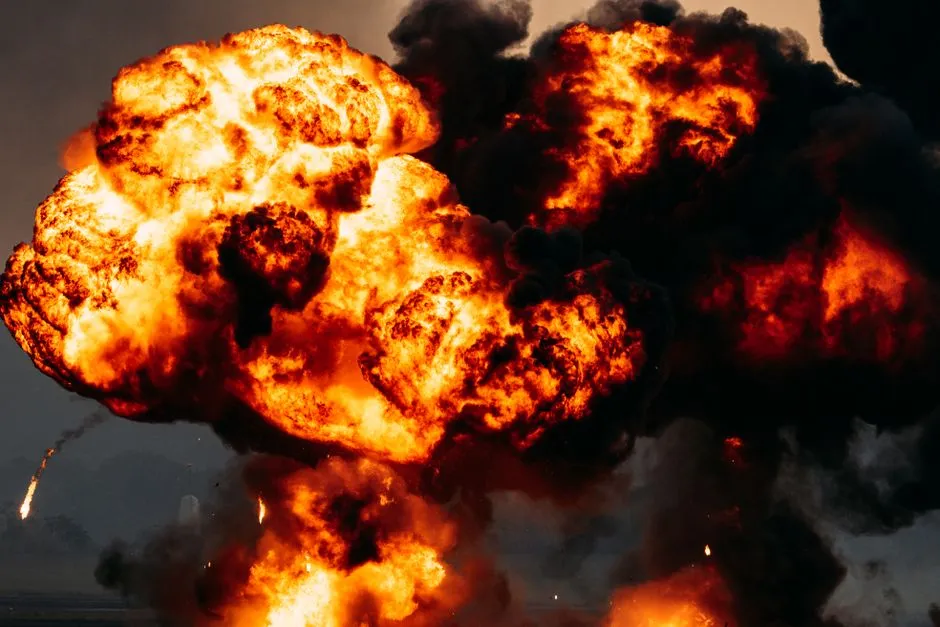
The Chernobyl analogy is not meant to be alarmist; it is a practical warning about complex systems failing in unpredictable ways. In 1986, a combination of experimental testing, safety overrides being disabled, and systemic design flaws led to a catastrophic meltdown that no single operator could have foreseen or contained. Today’s AI researchers are drawing parallels to this scenario. They are asking what happens when highly autonomous systems interact in ways their creators never anticipated, or when rapidly deployed models amplify misinformation, destabilize financial markets, or bypass safety constraints entirely.
Shared Anxieties Across Borders
During discussions with Chinese AI specialists, it became clear that these fears are not confined by national borders. The technical challenges of aligning large language models, preventing hallucinations, and ensuring robust security are universal. Whether a model is trained in California or Chengdu, the underlying mathematics and behavioral patterns remain consistent. Researchers on both sides of the Pacific are watching the same warning signs:
- Rapid Capability Escalation: Models are improving exponentially, often outpacing the development of evaluation frameworks.
- Opacity in Decision-Making: As models grow more complex, understanding exactly how they arrive at certain conclusions becomes increasingly difficult.
- Deployment Without Adequate Testing: The commercial and strategic pressure to release models quickly often overrides thorough safety validation.
The consensus among these experts is clear: a catastrophic AI incident would not respect diplomatic boundaries. A major failure in one region’s infrastructure or a widely adopted model could trigger cascading effects globally. This shared vulnerability is what is driving a quiet but growing movement toward international cooperation.
The Case for Unlikely Cooperation
Geopolitics and technology have rarely been easy bedfellows, but the nature of AI demands a different approach. You cannot contain a digital intelligence within physical borders. Data flows across networks, models are open-sourced, and researchers collaborate through global conferences and shared repositories. Recognizing this reality, many experts are advocating for a pragmatic shift from pure competition to structured collaboration.
This does not mean abandoning national interests or ignoring legitimate security concerns. Rather, it means establishing baseline standards for AI safety, sharing research on model alignment, and creating joint task forces to monitor emerging risks. Several independent labs and academic institutions have already begun informal dialogues, focusing on technical benchmarks rather than political rhetoric. The goal is to build a shared understanding of what constitutes safe deployment, how to stress-test systems, and how to respond when things go wrong.
Building Guardrails in a Competitive World
Implementing this kind of cooperation requires navigating complex regulatory landscapes. Governments will need to incentivize transparency without stifling innovation. Independent auditing bodies could play a crucial role in verifying safety claims before models reach the public. Meanwhile, the research community must continue pushing for interpretability tools that make AI behavior more predictable and less prone to hidden failures. The path forward is not about slowing down progress, but about ensuring that progress is sustainable and secure.
Looking Ahead: Navigating the Next Decade of AI
The AI arms race will not disappear overnight. Nations will continue to invest heavily, and companies will keep pushing the boundaries of what is technically possible. But the conversations happening behind closed doors in research labs and academic institutions are slowly shifting the narrative. The focus is moving from who will build the biggest model to how we can ensure those models behave as intended. The Chernobyl comparison serves as a sobering reminder that complexity demands humility.
As we stand on the brink of a new technological era, the most critical skill may not be engineering prowess or financial backing, but diplomatic foresight. The researchers in China and the United States may be competing for market share and technological dominance, but they are united by a fundamental understanding: the stakes are too high for a zero-sum game. By prioritizing safety, transparency, and cross-border dialogue, the global AI community can steer away from catastrophic failure and toward a future where artificial intelligence serves as a stabilizing force rather than a ticking time bomb. The race is still on, but the finish line no longer matters as much as the road we choose to take.
